Blog · Running Form · Gait Analysis
What Is Running Gait Analysis — and Which Type Do You Need?
Shoe shop, coach or lab? They all get called “gait analysis”, but they answer very different questions. Here's how to choose — and how to film your own running properly.
Quick answer
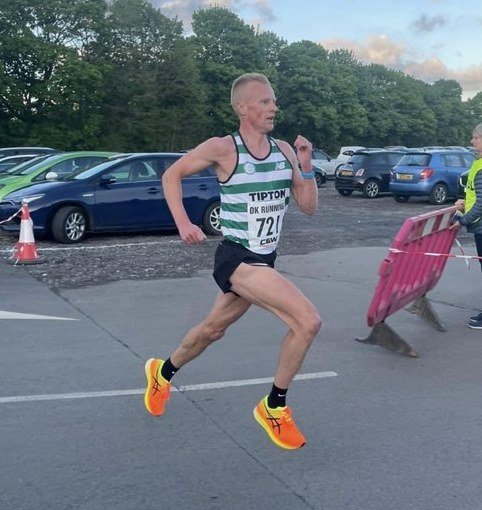
Running gait analysis is any assessment of how you move when you run. A shoe-shop gait test looks at your feet on a treadmill to help choose a shoe. A running form analysis is a coach's whole-body video assessment — arms, posture, trunk, landing, leg recovery — with drills and strength work to change it. Clinical biomechanics uses lab equipment, usually for injury rehabilitation. Most runners who want to run more efficiently need the middle one.
The Three Types of Gait Analysis
| Shoe shop | Running form analysis | Clinical / lab | |
|---|---|---|---|
| Looks at | Feet and ankles | Whole body, head to feet | Joint angles, forces, muscle activity |
| Where | Treadmill in store | Outdoors or from your own videos | Lab or clinic |
| Main purpose | Choosing a shoe | Running more efficiently; reducing problem habits | Diagnosing and rehabilitating injury |
| You leave with | A shoe recommendation | A report, cues, drills and a strength plan | Clinical findings and rehab |
| Typical cost | Free with a purchase | ~£75–£150 | £150+ |
None of these is “best”. They answer different questions. If you're injured right now, see a physiotherapist. If you want new shoes, a shop can help. If you want to understand how you run and change it, you need a form analysis.
Why the Whole Body Matters More Than the Feet
The most common thing I see when I analyse runners is that the visible “fault” isn't the real problem. A runner worried about heel striking is often actually overstriding — landing well in front of the hips — and the overstride is frequently driven from above, by arms that swing high and across the body.
Arms and legs work as a pair. A big forward arm swing invites a big forward leg swing. Arms that cross the chest twist the shoulders, and the hips twist back to keep you running straight. That's one habit, seen three ways — and it is invisible on a treadmill clip of your feet.
Fix the root — usually arm carriage, posture and trunk control — and the landing often sorts itself out without you ever thinking about your feet.
What a Good Running Form Analysis Covers
- Three angles: side on, from the front and from behind.
- More than one speed: form at easy pace can look different from race pace — and different again when tired.
- Strengths as well as faults, so you know what to protect.
- A root cause, not a list of ten problems.
- Ranked priorities and a few simple cues.
- Drills and strength work to make the change physically possible, and a plan to re-film and check progress.
- Honesty about limits — it isn't a medical diagnosis.
How to Film Your Running for Analysis
You don't need special equipment — a phone and a friend are enough.
- Choose the spot. A flat, straight path or track in good light. Avoid treadmills if you can; most people run differently on them.
- Warm up for at least 10 minutes so you're moving naturally.
- Side on: phone at hip height, landscape, 5–10 metres from your line. Run past it.
- From the front: run straight towards the camera.
- From behind: run straight away from it.
- Two speeds: repeat each angle at easy pace and at a faster pace (5k or marathon pace).
Wear fitted kit so hips and knees are visible, and your normal training shoes. Then send the clips for a remote running form analysis.
Cadence: What Matters and What Doesn't
The famous figure of 180 steps per minute came from watching elite runners race. It isn't a target for everyone. Taller runners, slower paces and easy days naturally produce lower cadences.
What's useful is your own number. Count your right foot strikes for 30 seconds and multiply by four. If you overstride, a small nudge of around 5% above that — with a metronome app for a few minutes at a time — shortens the stride without you thinking about your feet. Same pace, slightly shorter and quicker steps.
Can Changing Your Form Prevent Injury?
Be wary of anyone who promises it. Changing form moves load around; it doesn't make it disappear. Reducing an overstride may take load off the knees and shins, but it asks more of the calves and Achilles. That's why changes should be gradual and paired with calf, glute and trunk strength work — see strength training for runners.
Done sensibly, form work can make you more efficient and may reduce strain on areas that keep flaring up. Done suddenly, it can create a new problem. And if you're in pain now, start with a physio.
FAQs
What is running gait analysis?
Any assessment of how you move when you run — from a shoe-shop treadmill clip, to a coach's whole-body form analysis, to lab biomechanics.
Is shoe-shop gait analysis worth it?
For choosing a comfortable shoe, it can help. For understanding your running, it tells you very little.
Gait analysis vs running form analysis — what's the difference?
Gait analysis is the umbrella term. Running form analysis is a coach's whole-body technique assessment with a plan to change it.
Should I aim for 180 cadence?
No. Use your own baseline; a small rise of around 5% can help if you overstride.
Can changing running form prevent injury?
It can reduce load in some areas but shifts it to others. Make changes gradually, with strength work, and see a physio if you're injured.
Get your running analysed — £99
In person near Sedgley, Dudley and Wolverhampton, or online from your own videos. Frame-by-frame review, written report, drills, strength programme and 12-week plan.