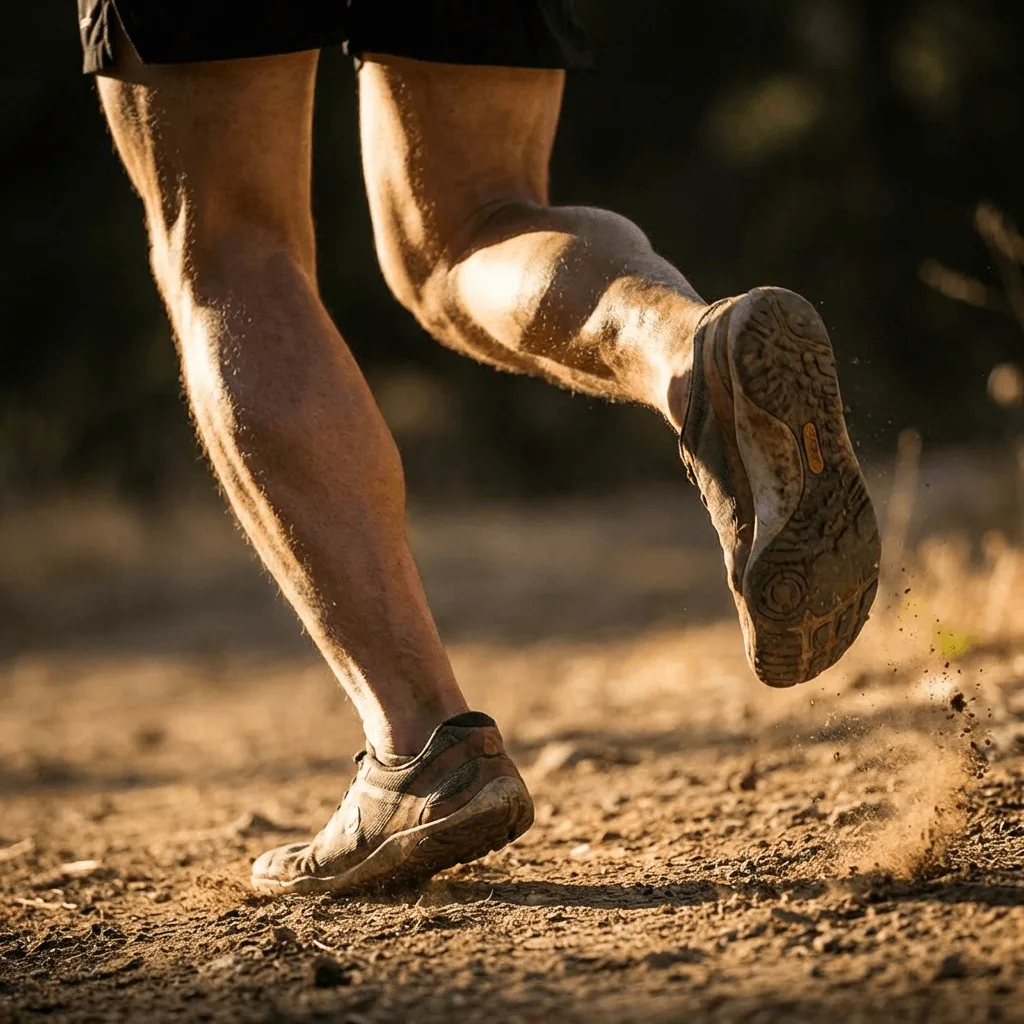
Forget the half-price trainers and the discounted gym memberships. This January, we are talking about the only "Buy One, Get One Free" deal that actually matters for your PB: Elastic Strain Energy.
If you've ever watched elite Kenyan marathoners glide past, looking like they are barely touching the ground, you aren't just seeing "fitness." You are seeing a masterclass in the use of the Achilles tendon—the body's most efficient energy-saving spring.
The Breakdown
The Achilles tendon is the unsung hero of the running stride. It connects your calf muscles to your heel bone and acts as a biological "pogo stick".
How it works
During the initial contact phase of your stride, the tendon stretches, storing elastic strain energy. As you push off, it recoils, releasing that "free" energy back into your stride.
The Power Output
Research shows that up to 34% of the power produced at the ankle joint during running comes from the Achilles tendon, not the muscles.
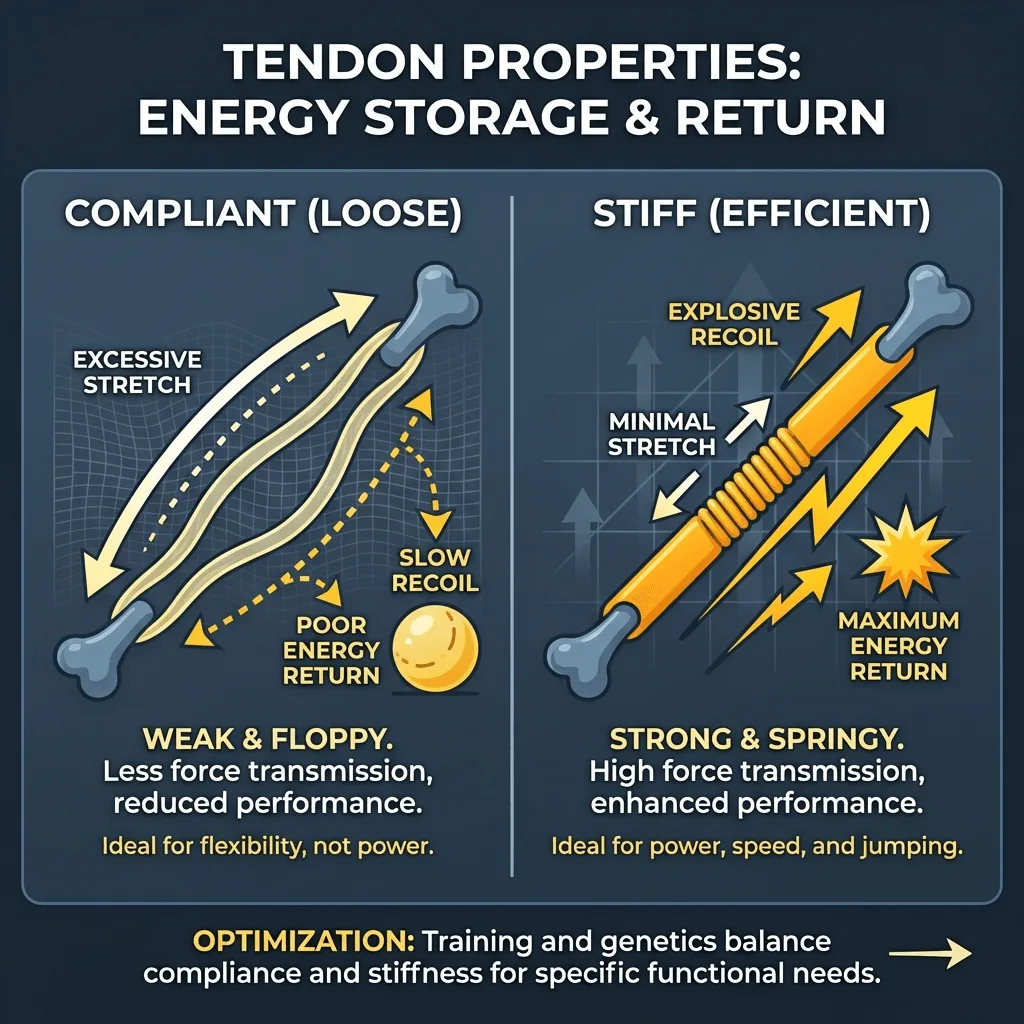
The "Kenyan" Indicator: Morphology matters. A longer, thinner, and stronger Achilles—common in elite distance runners—is indicative of high-speed efficiency and spring-like form. Conversely, a shorter, thicker tendon often results in a "shuffling" style with less bounce and higher muscle fatigue.
Tendon Stiffness: Why "Tight" is Right
In the world of running, stiffness is a superpower. Think of a stiff tendon like a thick, high-tension elastic band. It stretches less under load but recoils with explosive speed.
A "flexible" or compliant tendon is like a thin, overstretched band; it absorbs force but returns very little, forcing your muscles to work harder and wasting energy.
My Journey: From Tendonitis to "Bouncy" PBs
Early in my running journey, I was the classic "stretching advocate." I thought I needed to be flexible to be fast. The result? Constant Achilles tendinopathy.
I overcame it not by stretching, but by building stiffness and foundational strength:
The Enemy of Efficiency: "Dynamic Creep"
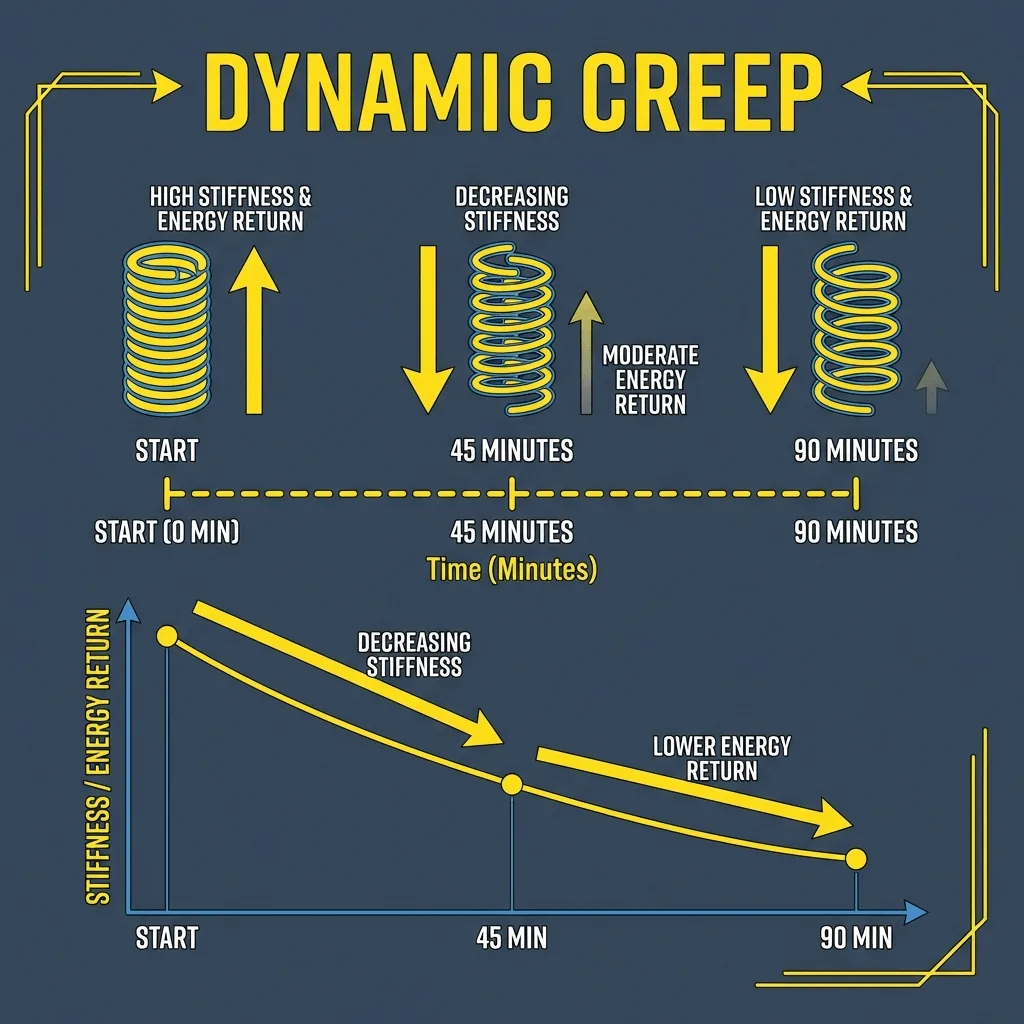
Just like a rubber band loses its snap if you stretch it repeatedly, your tendon "creeps" and loosens during a long run.
The Truth About Today's "Carbon" Crutch
We've been sold a lie that "strong glutes and core" are the only keys to running. While important, a strong Achilles is far more effective for pure speed.
The Carbon Shoe Trap Today's runners are increasingly reliant on carbon-plated "super shoes." These shoes provide an artificial spring, but they can actually cause your Achilles to decondition because the shoe is doing the work the tendon should be doing. If you want sustainable speed, you need to build the spring inside your leg, not just under it.
How to Build Your Spring
1. Heavy Reps, Not Volume
To increase stiffness, you need high-magnitude loading (think 1-5 reps of heavy calf raises). High-volume, light-weight reps do almost nothing for adaptation.
2. Plyometric Combination
Combine heavy lifting with plyometrics (jumping) to teach the tendon to handle rapid cycles of stretch and recoil.
Coach's Note on Timing This work must be incorporated into the Base Phase of your cycle. You cannot build tendon density while simultaneously smashing peak marathon mileage; the tendon needs recovery to adapt to the heavy loads.
Two Golden Rules for This Year
1. Stop Stretching Before You Run
You want your Achilles to be a tight, springy coil when you start. Stretching "loosens" the spring, making you less efficient. Save the stretching for after your session—and even then, focus on muscle, not tendon.
2. Don't Take Your Spring for Granted
Recently, I had surgery to remove a Haglund's deformity. While I am now pain-free, I've experienced a massive drop in power. It was a stark reminder: once that natural elastic recoil is compromised, your "free energy" disappears.
Conclusion: Invest in Your Internal Spring
This January, don't just "run more." Invest in the stiffness of your Achilles through heavy lifting and smart loading. It is the only way to get that FREE energy that turns a shuffle into a stride.