We have all stood on a start line on a sweltering morning, or set off on a long run as the sun climbs, and felt the legs turn to lead. The heart rate redlines at what should be an easy pace. The whole thing wilts. For years most of us filed this under bad luck and waited for cooler weather.
I do not see it that way any more, and that change of mind is the reason I am writing this. Because in the lead up to a European Championships marathon, I spent the British summer deliberately walking into the heat rather than hiding from it. The heat was not the problem. It was the upgrade.
The short version
- Heat training is the poor runner's altitude camp. Regular heat exposure expands your blood plasma and improves your engine, no flights or mountains required.
- It works in about 7 to 14 days. Easy warm runs, or a sauna or hot bath after training, will do it.
- The benefit carries into cool races too, which is why summer heat is a gift for the autumn marathoner.
- Hydration is a balance, not a free for all. Drinking too much is as dangerous as drinking too little.
- In a real heatwave, safety comes first. Slow down, run early, and keep the hard stuff for cooler days.
The heat chamber that changed my racing
My European Championships marathon was in the middle of July, in serious heat. Rather than gamble on the weather being kind, I booked a weekly session in a heat chamber in the build up. The aim was narrow and measurable: improve my sweat response so my body cooled itself more efficiently when it mattered.
It was not glamorous. It was a hot room, a treadmill and a lot of dripping. But it was measured, and it improved week on week. I went into that race prepared for the conditions instead of praying against them.
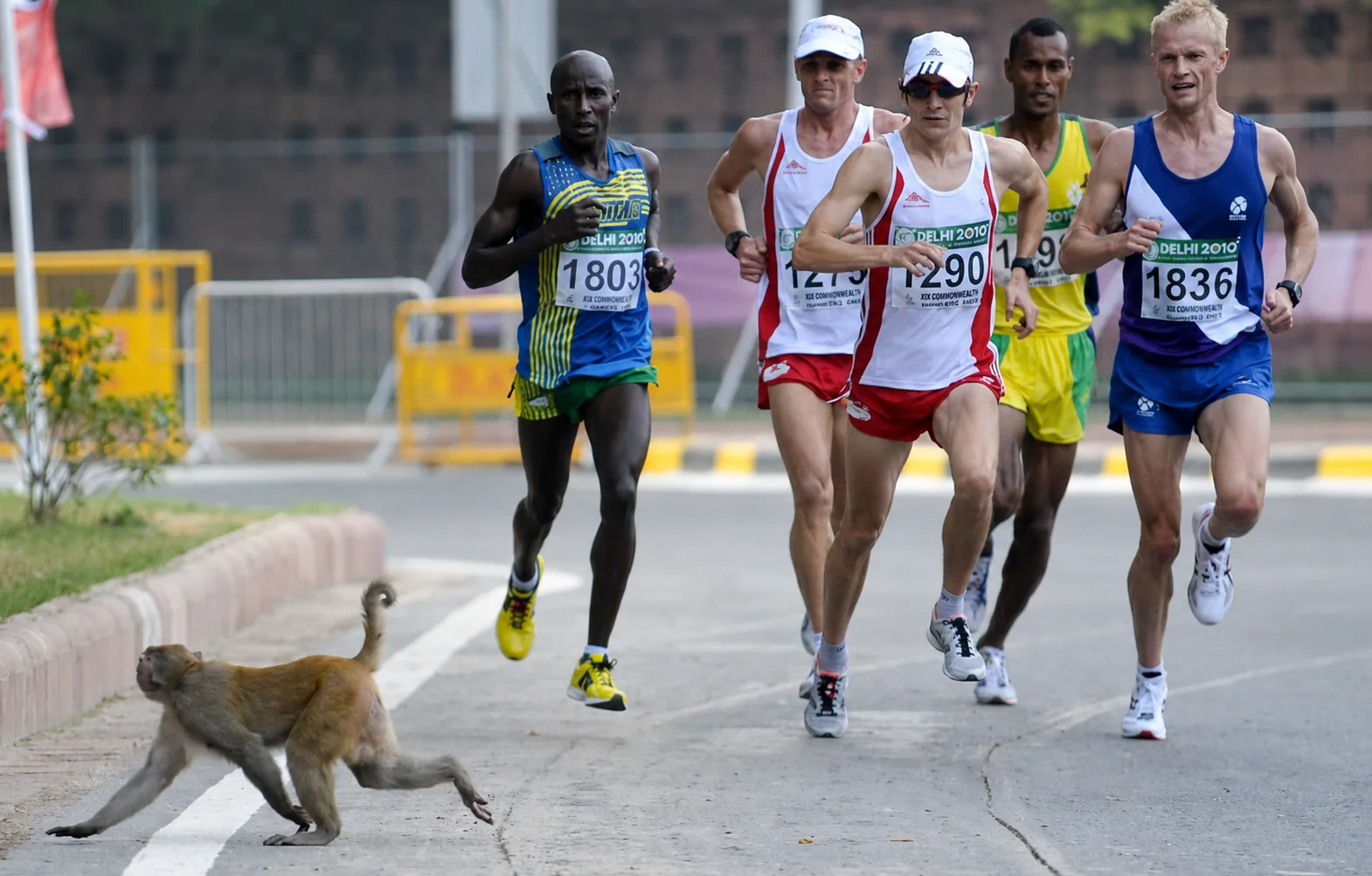
Here is the part that surprised even me. I carried those same principles forward to the Commonwealth Games marathon in Delhi, run in the mid 30s. In that kind of heat the textbook outcome is to blow up in the second half. Instead I ran even splits and clocked 2:25. Not my fastest marathon on paper, but on a brutally hot day, against runners who faded, even pacing was the win. That is what a trained sweat response buys you: the ability to hold it together when everyone around you is falling apart.
Heat is not an obstacle. It is a profound physiological stressor that, once you train it, becomes a weapon.
Heat is the poor runner's altitude camp
Altitude camps are the classic way to thicken the blood and lift the engine. They are also expensive, time consuming and out of reach for most of us with jobs and families. The good news from the research is that heat does something remarkably similar, for free, in your own back garden.
In a well known study by Oberholzer and colleagues, athletes who trained in the heat over several weeks saw a genuine jump in haemoglobin mass and an increase in red blood cell volume. Other research points to improvements in VO2max in the region of 5 to 8 percent. The mechanism is elegant: heat forces your body to expand its blood plasma to cope, and that cascade nudges the natural production of EPO, the same hormone altitude is prized for.
The kicker, and the reason I want every autumn marathoner reading this, is that those blood changes appear to carry over into cool conditions too, with studies suggesting a few percent improvement even when race day turns out mild. So the heatwave you are cursing this week could quietly be building the engine for your October target.
How to acclimatise, two ways
You do not need a lab. There are two routes, and most runners can use both.
Active: warm runs
The simplest method is to run easy in the warmer part of the day, on purpose, a few times a week. Keep the effort genuinely easy. You are there to soak up heat, not to smash a session. Your pace will be slower than normal for the same heart rate, and that is exactly the point.
Passive: sauna or hot bath
For those of us who are time pressed, the passive route is brilliant news. A sauna or a hot bath taken straight after your run, while your core temperature is still up, can drive much of the same adaptation. Aim for 20 to 30 minutes in a sauna, or 30 to 40 minutes in a hot bath, building up gradually.
A word on the "no fluids" trick
You will read that elite protocols sometimes restrict fluids during a sauna to push the adaptation harder. It can work, but it is an advanced tool, and I would only use it with experienced athletes in a controlled indoor setting, never out on the road and never during an active heatwave warning.
If you are new to this, do the opposite: drink to thirst, keep the sessions short to start with, and rehydrate well afterwards. The adaptation still comes, and you stay safe. Sensible beats heroic.
Cool the body before and during
Acclimatisation is the long game. On the day itself, you can also win minutes by managing your temperature directly.
Start cool. Lowering your core temperature before you set off, with an ice vest in the warm up or an ice slurry to sip, creates a buffer. It can delay the point at which you hit a critical temperature by several minutes, which in a race is a long time.
Cool the right spots. A huge amount of how hard the heat feels is down to perception, not just your actual core temperature. Your neck and wrists are packed with the receptors that tell your brain how hot you are. A wet neck buff, or simply tipping water over your head and neck at the water stations, lowers how hard the effort feels even before your core cools. Trick the perception and you lift the ceiling on your output.
Your sweat gets smarter
This is the change I felt most clearly between Barcelona and Delhi. As you acclimatise, your sweat itself improves. An unacclimatised runner can pour sodium out in their sweat. A trained one holds far more of it back, losing much less salt for the same cooling effect. You start sweating sooner, and you sweat more efficiently. Your kidneys quietly manage the whole balancing act in the background.
In plain terms: a trained sweat response is the difference between cooling yourself effectively and grinding to a halt with cramp and a thumping heart rate. It is trainable, and it is one of the biggest levers you have in the heat.
The hydration paradox: more is not better
The instinct in the heat is to drink and drink. Be careful here, because this is where runners get genuinely hurt. Drinking too much plain water dilutes the sodium in your blood and can cause hyponatremia, which is dangerous and, in severe cases, fatal.
The safest approach for most runners is to drink to thirst rather than to a schedule, and to take electrolytes alongside water on longer or hotter efforts rather than water on its own. Sodium matters more than sheer volume once you are out there for a long time. A simple gut check: if you finish a run heavier than you started it, you drank too much.
The gains are rented, not owned
One honest caveat. Heat adaptation fades once you stop, at roughly two and a half percent a day. That is not a reason to avoid it, it is a reason to time it. Build your heat work in the weeks before a hot target, then top it up with a maintenance session every few days through your taper so you arrive on the start line with the engine still primed.
So the next time the forecast turns ugly and your group chat fills up with people writing off their training, you will know better. The heat is not stealing your fitness. Trained properly, it is handing you an upgrade. Time to stop wilting and start thriving.
Running safely in this week's heat
Everything above is about training smart over weeks. During an active heatwave, the priority is simply to stay well: run early or late, stick to shade, slow right down, and skip the hard sessions until it cools. Stop immediately if you feel dizzy, get a headache, or stop sweating. If you are older, pregnant, or managing a health condition, take extra care and check with a professional.